
Yield Loop: Operational Manual for Triple-Digit DeFi Returns (2026)
Yield Loop 2026: The Definitive Operational Manual for Advanced DeFi Yield Generation
As the Ethereum ecosystem transitions into a mature restaking-prime environment in 2026, traditional single-layer staking has become a legacy strategy for passive capital preservation. To capture outsized alpha, professional operators have moved toward Yield Loop mechanics—a rigorous framework of recursive deployment and yield stripping that treats ETH as a multi-state capital primitive. This manual provides the definitive operational blueprint for navigating this high-velocity landscape, moving beyond theoretical APY to deliver a technical execution road map for achieving and sustaining triple-digit returns while maintaining institutional-grade risk parameters.
Mapping the 2026 LRT Execution Landscape
The LRT market in 2026 has matured into a stratified execution environment where liquidity quality, lender acceptance, and peg behavior diverge materially between assets. eETH remains the most operationally stable option, benefiting from deep secondary liquidity and broad collateral support across isolated lending markets. pufETH introduces higher AVS-linked reward density at the cost of thinner exit liquidity. Newer Symbiotic-based LRTs prioritize modular reward routing but expose operators to maturity constraints and redemption latency. Selection is therefore a risk-adjusted execution decision, not a yield-chasing exercise.
Selecting the Base Layer for Recursive Deployment
Base-layer selection defines the maximum achievable leverage and the survivability of the loop under stress. In 2026, lending venues explicitly differentiate collateral types through isolated market design. Assets with conservative Loan-to-Value parameters but universal acceptance allow deeper recursion with lower liquidation sensitivity. An LRT offering elevated rewards but limited lender support forces shallow loops and higher borrow cost volatility. Professional operators optimize for capital reuse and unwind speed, discounting headline rewards that cannot be safely levered across multiple venues.
Capital Velocity and Reward Cycle Timing
Yield Loops are sensitive to temporal misalignment between funding costs and reward emissions. Borrowing rates accrue continuously, while LRT rewards are distributed in discrete cycles tied to AVS performance and protocol-defined epochs. Entering a loop mid-cycle compresses net yield and amplifies downside risk. Optimal deployment typically occurs immediately following reward snapshots, when secondary-market pricing reflects temporary discounting. Mapping maturity horizons and point accrual schedules is therefore a prerequisite for any leveraged strategy seeking triple-digit returns.

Maturity Constraints and Exit Optionality
Maturity mechanics represent a hidden leverage multiplier in 2026. Symbiotic-based LRTs frequently introduce delayed redemption windows or soft exit penalties that materially impair crisis response time. At 3x leverage, delayed redemption is functionally equivalent to reduced liquidity depth. During volatility events, the inability to rapidly convert LRTs into ETH increases liquidation probability regardless of collateral ratios. Operators should apply a strict maturity discount to projected yields when redemption latency exceeds one week.
LRT Liquidity Matrix for Operational Planning
The table below summarizes representative LRT characteristics observed in early 2026 under normal market conditions. Peg stability reflects historical deviation during stress events, collateral acceptance captures integration across isolated lending venues, and exit liquidity depth measures the capacity to unwind leveraged positions without material slippage. These metrics form the baseline inputs for leverage calibration and liquidation buffer design in subsequent loop construction.
| Protocol | Peg Stability Score | Collateral Acceptance | Exit Liquidity Depth |
|---|---|---|---|
| eETH | High | Aave v4, Morpho Blue, Compound Isolated | Deep |
| pufETH | Medium-High | Morpho Blue, Select Aave v4 Markets | Medium |
| Symbiotic LRTs | Variable | Primarily Morpho Blue | Shallow–Medium |
How to Use Yield Loops 2026: Recursive Execution Framework
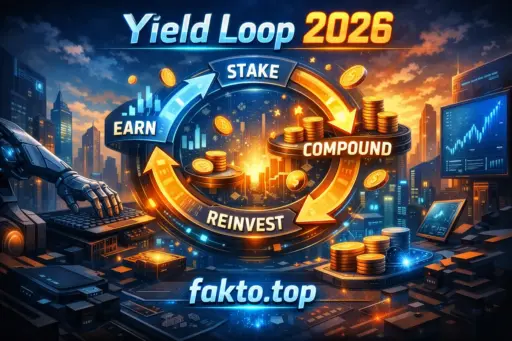
Recursive looping in 2026 is no longer a manual, trial-and-error process. It is an execution framework built around isolated lending markets, predictable liquidation mechanics, and capital-efficient leverage. The objective is to transform an initial LRT position into a stacked yield engine by repeatedly borrowing ETH, re-staking it into additional LRT, and redeploying that LRT as collateral. Precision matters. Small miscalculations in Loan-to-Value or borrowing rates compound rapidly at scale, turning theoretical yield into realized loss.
Venue Selection and Market Isolation
Venue choice defines the operational ceiling of any Yield Loop. In 2026, Morpho Blue and Aave v4 dominate recursive strategies due to their isolated market architecture. Unlike pooled risk models, isolated markets prevent cross-contamination from unrelated collateral types, enabling more aggressive leverage without systemic exposure. Morpho Blue offers granular risk parameters per LRT, while Aave v4 introduces dynamic interest curves that better reflect real-time utilization. v2 and v3 deployments remain unsuitable due to shared liquidity pools and unpredictable rate spikes under stress.
Deploying the Folding Process
The folding process begins by depositing the selected LRT into an isolated lending market as collateral. ETH is then borrowed against this position at a conservative initial LTV. The borrowed ETH is immediately restaked or converted into additional LRT, which is redeposited as new collateral. This cycle is repeated until the target leverage ratio is reached. Each fold increases both yield exposure and liquidation sensitivity. Operators typically stop one iteration below the theoretical maximum to preserve a functional liquidation buffer.
Flashloan-Backed Leverage Optimization
Gas efficiency and slippage control are decisive at scale. Flashloan-backed folding allows operators to reach target leverage in a single atomic transaction. By temporarily borrowing ETH via a flashloan, the full recursive loop can be executed instantly: deposit LRT, borrow ETH, restake, redeposit, and repay the flashloan within one block. This approach reduces cumulative gas costs, minimizes interim price risk, and eliminates partial execution states. In 2026, flashloan folding is standard practice for leverage ratios above 2.5x.
Calculating Maximum Theoretical Leverage
Leverage limits are mathematically constrained by protocol-defined Loan-to-Value ratios. The maximum theoretical leverage achievable through recursive borrowing is a direct function of the LTV parameter applied to the collateral asset. The relationship is defined as follows:
$$
L_{max} = \frac{1}{1 – LTV}
$$
For example, an LRT with a 75% LTV yields a theoretical maximum leverage of 4x. In practice, operators cap leverage at 70–80% of this maximum to account for interest rate volatility, peg deviations, and oracle latency. Ignoring this buffer transforms normal market noise into liquidation triggers.
Monitoring Borrow Costs and Slippage
Recursive Yield Loops convert variable borrowing rates into a structural risk factor. Each additional fold increases sensitivity to utilization-driven interest spikes. In 2026, real-time monitoring of borrow APR across isolated markets is mandatory. Operators continuously compare marginal yield from additional LRT exposure against incremental funding costs. Slippage must also be modeled, particularly when converting large ETH volumes into LRT during volatile periods. Execution discipline requires predefined abort conditions when net yield turns negative.
Stabilizing the Loop Before Expansion
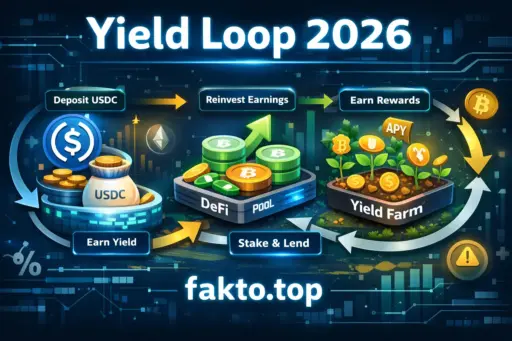
Before increasing leverage or introducing yield stripping, the base loop must demonstrate stability across at least one full reward cycle. This includes maintaining a consistent Health Factor, confirming predictable reward accrual
Advanced Pendle Yield Stripping
By 2026, Pendle has evolved from a niche yield marketplace into a core execution layer for advanced Yield Loops. Yield stripping allows operators to decouple principal exposure from reward volatility, converting uncertain emissions into tradeable instruments. Within a recursive loop, Pendle is not used for passive yield enhancement but as an active capital management tool. Correctly deployed, it enables aggressive upside capture during reward expansions while simultaneously offering fixed-rate insulation during periods of funding stress.
Structuring the Yield Token Long
The Yield Token, or YT, represents the variable reward stream of an LRT position. In 2026, YT pricing is driven primarily by AVS reward expectations, airdrop probability, and time-to-maturity. Optimal YT longs are executed during reward sprints, typically announced ahead of AVS onboarding or validator expansion phases. Market inefficiencies frequently emerge immediately after announcement, as principal-focused capital exits and compresses YT prices. Operators deploy capital into YT at these moments to amplify upside without increasing collateral leverage.
Timing Entry Around AVS Reward Cycles
AVS reward cycles introduce predictable volatility patterns into YT markets. Emission schedules are front-loaded, while borrowing costs adjust with delay. This temporal mismatch creates windows where YT implied yield exceeds funding rates. Successful execution requires monitoring AVS governance updates, validator onboarding timelines, and reward multiplier adjustments. In practice, operators scale into YT positions gradually, aligning notional exposure with remaining reward duration to avoid overpaying for decaying yield streams.
Deploying the Principal Token Hedge
The Principal Token, or PT, provides a fixed-yield anchor within an otherwise volatile Yield Loop. During periods of elevated leverage across the ecosystem, borrowing rates spike and variable yields compress. PT positions become attractive under these conditions, offering fixed returns often exceeding 20% annualized. Operators rotate a portion of loop capital into PT to stabilize cash flows while maintaining exposure to ETH price appreciation through the underlying collateral. This hedge reduces sensitivity to short-term funding shocks.
Rolling Expired Positions into 2026 Pools
Yield stripping introduces maturity management as an operational requirement. As PT and YT positions approach expiry, liquidity concentrates and slippage risk increases. In early 2026, many operators face migration from late-2025 pools into newly issued 2026 maturities. Efficient rolling requires pre-positioning liquidity, exiting expiring YT before terminal decay, and redeploying principal into longer-dated pools during periods of low utilization. Automated routing tools reduce execution friction but do not eliminate timing risk.
Integrating Pendle Within a Recursive Loop
Pendle positions must be treated as modular overlays rather than core collateral. PT and YT tokens are generally unsuitable as borrowing collateral and should remain segregated from the leverage engine. Operators track Pendle exposure independently, modeling worst-case drawdowns during reward compression. Integration discipline ensures that yield stripping enhances loop performance without introducing correlated liquidation risk. In 2026, the most resilient Yield Loops are those where Pendle is used for yield shaping, not leverage amplification.
Risk Mitigation and the Liquidation Buffer
At 3x leverage, Yield Loops fail not from low yield but from inadequate risk controls. In 2026, liquidation events are faster, oracle updates are more granular, and cross-protocol reflexivity amplifies small price deviations. Risk mitigation is therefore not a defensive afterthought but a primary execution layer. The objective is to maintain continuous operational solvency under rapid ETH drawdowns, LRT de-pegs, and interest rate spikes without forced unwinds.
Establishing the Health Factor Standard
Professional operators in 2026 standardize a minimum Health Factor of 1.35x across all recursive positions. This threshold reflects empirical liquidation behavior observed during high-volatility epochs, accounting for oracle latency and block-level price gaps. Operating closer to protocol-defined minimums materially increases tail risk. Health Factor targets must be enforced dynamically, adjusting collateral or debt exposure as utilization and volatility shift. Static thresholds are insufficient under variable-rate isolated lending models.
Calibrating the Liquidation Buffer
The liquidation buffer represents the distance between current leverage and protocol-imposed liquidation thresholds. Buffer sizing is driven by three variables: ETH intraday volatility, LRT peg variance, and borrowing rate elasticity. In practice, operators calculate worst-case drawdowns over a 15-minute window and size buffers accordingly. A common operational rule is to tolerate a 10–12% ETH drawdown without triggering liquidation. This requires deliberately under-utilizing available LTV capacity and accepting lower headline yields.
Managing LRT De-Peg Risk
LRT de-pegs are the dominant non-ETH risk vector in 2026. Even high-quality assets experience temporary deviations during validator incidents or AVS reward uncertainty. Operators mitigate this risk by monitoring LRT/ETH spreads in real time and modeling correlated stress scenarios where ETH price declines coincide with LRT underperformance. Conservative liquidation buffers assume simultaneous adverse moves. Ignoring correlation effects results in false confidence during calm markets and abrupt failure during regime shifts.
Automated Circuit Breakers and Alerting
Manual monitoring is insufficient at scale. Automated alerts are mandatory for price divergence, Health Factor deterioration, and utilization spikes. Tools such as Halo and Tenderly enable condition-based notifications tied directly to on-chain state changes. Operators define escalation thresholds that trigger partial deleveraging before liquidation risk becomes acute. Effective alerting systems reduce reaction time from minutes to seconds, materially improving survival probability during flash volatility events.
Flash Crash Exit Playbooks
Exit strategy design determines whether capital is preserved or destroyed during extreme events. A predefined war-room checklist governs execution order: first, halt further borrowing; second, unwind Pendle YT exposure; third, repay variable-rate debt using liquid ETH reserves; finally, redeem LRT collateral if required. Asset sale order prioritizes liquidity depth over yield preservation. Deviating from the playbook under stress introduces decision latency and execution errors.
Stress Testing Before Capital Scaling
No Yield Loop should be scaled without simulated stress testing. Operators replay historical volatility events and synthetic de-peg scenarios to observe Health Factor behavior and liquidation proximity. Stress testing validates assumptions about buffer adequacy, oracle behavior, and execution latency. In 2026, capital scaling without prior stress validation is considered operational negligence rather than risk tolerance.
2026 Tech Stack for Professional Yield Loop Operations
Executing multi-layered Yield Loops at scale in 2026 requires a fully integrated technical stack. Manual monitoring and spreadsheet calculations are no longer sufficient. The stack must combine high-frequency data ingestion, automated rebalancing, and gas-optimized transaction execution. Operators standardize dashboards that display Health Factor, LRT peg deviation, AVS reward cycles, and borrowing cost spread across multiple venues in real time. Centralized dashboards and custom analytics scripts allow simultaneous oversight of up to 15 recursive positions with minimal human intervention.
Advanced Dashboarding and Analytics
Professional dashboards in 2026 consolidate multi-protocol state into actionable insights. Platforms like Enso and Instadapp provide live Health Factor tracking, LRT collateral ratios, and position-specific flashloan availability. Operators configure real-time alerts for peg divergence, liquidation proximity, and reward cycle initiation. Dashboards must integrate both L1 and L2 data feeds to account for gas cost variability, transaction queuing, and cross-layer settlement risk. All actionable metrics are displayed with color-coded severity levels to enable split-second decision-making.
Automated Rebalancing Tools
Recursive Yield Loops demand continuous collateral adjustment. Automated rebalancing scripts execute pre-defined rules for folding, borrowing, and redepositing across multiple LRTs. They calculate incremental leverage, simulate slippage impact, and adjust positions dynamically to maintain Health Factor thresholds. Scripts incorporate flashloan capabilities for atomic execution, reducing gas exposure and interim market risk. Operators maintain version-controlled templates to simulate different LRT combinations and folding sequences before committing capital.
L2 Gas Optimization and Transaction Bundling
Layer-2 networks reduce transaction costs but introduce new execution timing challenges. High-frequency folding exposes operators to gas spikes, failed transactions, and front-running risk. Tools that optimize batch execution, bundle multiple steps in a single atomic call, and prioritize L2 routing minimize these issues. Operators actively monitor mempool conditions, compare fee markets, and schedule non-critical rebalances during low utilization windows. Effective L2 management allows three-fold leverage execution with negligible additional gas overhead, preserving capital efficiency.
Integration with Pendle and AVS Monitoring
Pendle tokens require separate monitoring within the tech stack. YT and PT positions are tracked independently, with live pricing, pending reward calculations, and maturity schedules integrated into dashboards. AVS reward streams are monitored through oracle feeds and governance updates to anticipate reward sprints. Integration scripts validate that Pendle exposure does not inadvertently affect base loop collateral or Health Factor, ensuring modularity between yield-stripping overlays and recursive core positions.
Simulation and Backtesting Frameworks
Before deploying additional capital, operators simulate loops under varying market conditions. Backtesting frameworks ingest historical LRT volatility, borrowing rate spikes, and AVS reward cycles to quantify expected drawdowns and margin buffer sufficiency. They allow scenario testing for flash crashes, de-peg events, and liquidity shocks. Results inform operational thresholds, Health Factor targets, and folding limits. Simulation ensures that real-time execution aligns with modeled outcomes, reducing tail-risk exposure and enabling data-driven scaling decisions.
Security and Operational Redundancy
2026 operations demand multiple layers of redundancy. Dashboard nodes, L2 execution relays, and automated scripts are distributed to prevent single points of failure. Operators implement multi-signature governance for high-value transactions and maintain hot/cold segregation of capital reserves. Continuous monitoring, paired with automated failover scripts, ensures that loop execution persists even during node outages or L2 network congestion. Security considerations are embedded directly into operational routines rather than treated as peripheral tasks.
Tax and Jurisdictional Compliance for US Operators
Operating Yield Loops in the United States in 2026 requires strict adherence to IRS and SEC guidance while maintaining operational continuity. Recursive loops amplify taxable events due to repeated borrowing, redepositing, and reward realization. Each LRT fold, PT, or YT trade can trigger recognition events if not properly accounted for. Professional operators design execution protocols that integrate tax-aware record keeping into every step, ensuring that the loop remains compliant without interrupting leverage deployment or yield optimization.
Specific Identification Accounting for ETH Lots
Specific Identification accounting enables precise tracking of ETH lots through multiple LRT conversions, folding sequences, and restaking cycles. Operators maintain detailed ledger entries that document acquisition price, timestamp, and LRT/ETH conversion ratios. This level of granularity allows for accurate calculation of capital gains, even when partial positions are liquidated or rewards are harvested. By avoiding FIFO or average cost assumptions, taxable gains reflect actual economic exposure, minimizing IRS audit risk and enabling deferred recognition where legally permissible.
Broker Definition Impact on DeFi Smart Contracts
2026 updates to the US broker definition extend regulatory oversight to certain smart contract operators. Any entity that facilitates the transfer or lending of crypto-derived instruments may fall within broker obligations. Operators mitigate risk by designing loops that segregate counterparty roles, ensuring that no single protocol or agent inadvertently triggers broker status. Documentation and operational transparency are critical: all LRT borrowing, flashloan execution, and Pendle yield-stripping activity must be traceable, auditable, and defensible under IRS inquiry.
Utilizing Wrapped Rewards to Defer Taxable Events
Wrapped reward mechanisms allow operators to defer recognition of earned yield until a chosen point, reducing immediate tax liability. By converting raw AVS or protocol-native rewards into wrapped equivalents, loops can maintain exposure while delaying a taxable event. This technique requires careful monitoring of wrapped token governance, maturity, and liquidity. Improper handling can unintentionally accelerate recognition or expose operators to unintended income classification. Integration with automated dashboards ensures real-time compliance tracking for each reward stream.
Integration with Yield Loop Execution Protocols
Tax compliance is embedded directly into operational protocols rather than treated as an afterthought. Each folding step, leverage adjustment, and Pendle interaction is annotated with lot tracking and event classification. Automated reporting scripts generate transaction summaries suitable for IRS filing, providing both audit-ready documentation and actionable insights for operators to adjust positions dynamically. By unifying execution and compliance, loops achieve both maximum capital efficiency and regulatory defensibility.
Stress Testing Tax Scenarios
Operators simulate loop execution under various IRS interpretations, interest rate changes, and reward schedule adjustments. Stress testing ensures that even under unexpected events—such as AVS reward acceleration or LRT de-peg—the calculated tax exposure remains within acceptable thresholds. Scenario analysis informs buffer sizing, folding limits, and reward harvesting cadence. In 2026, rigorous tax stress testing is considered an integral part of operational due diligence, on par with liquidation and health factor monitoring.
Jurisdictional Awareness and Multistate Compliance
US operators must account for state-specific reporting requirements. Certain states impose additional obligations on crypto lending or interest-bearing instruments, which can affect loop deployment strategy. Operators maintain jurisdictional checklists, ensuring that LRT collateral, Pendle positions, and folded ETH exposure comply with both federal and state regulations. Multi-layered reporting, combined with automated lot tracking, enables operators to scale loops nationally without exposing themselves to avoidable penalties or reporting discrepancies.
Disclaimer
The information provided in this article is for educational and informational purposes only and does not constitute financial, investment, or legal advice. Yield farming, recursive staking, and related DeFi strategies involve significant risk, including the potential loss of principal. Readers should conduct their own due diligence and consult with licensed financial or legal professionals before engaging in any blockchain-based investment or protocol interaction. Past performance is not indicative of future results, and the protocols discussed may change or cease operation. The author and publisher are not responsible for any actions taken based on the content of this guide.