
Kraken Review 2025-2026: Is It the Safest US Exchange for Staking & BTC Yield?
Kraken Review The Safest US Exchange for Staking, Low Fees & SPDI Security
Crypto fam, the U.S. market isn’t about chasing moonshots anymore—it’s about staying afloat. After SEC crackdowns, staking bans, and the catastrophic collapse of exchanges that promised easy riches, nobody’s dreaming about Lambos. People just want a place to park their crypto, earn a sustainable yield, maybe stake a few tokens—without waking up to frozen accounts or a half-baked “we regret to inform you” tweet.
It’s not hype season. It’s survival mode.
Kraken? Far from perfect. The interface looks like it skipped a few aesthetic upgrades, and yes, the user experience can sometimes feel a bit sluggish compared to the polished look of Coinbase. But here’s the game-changer—it’s still here. Still regulated. Still solvent. Still paying. In this market, that kind of consistency feels almost heroic. After watching other platforms vanish overnight, get slapped with lawsuits, or quietly disappear on U.S. users, Kraken’s steady, no-drama approach has become the industry standard for relief.
This guide walks through what Kraken actually offers Americans right now—focusing on its SPDI bank charter, the revolutionary return of legal on-chain staking (and BTC yield via Babylon), custody protocols, and why its compliance strategy has made it the anti-chaos antidote in 2025. No hype, no rocket emojis, no promises of the “next Solana.” Just regulated tools that still work when everything else looks like a rug waiting to happen.
Kraken’s Core Proposition: Stable Yields, Zero DeFi Drama
Kraken’s savings products are built for people who value peace of mind over unrealistic APY. They allow users to earn passive income without diving into sketchy DeFi pools, navigating complex smart contract risks, or paying egregious gas fees. In 2025, they offer flexible and fixed savings on major assets, all operating within the strict confines of US law.
Crypto Savings on Kraken: The USDC Standout
While rates aren’t “moon-level,” they are stable, legal, and competitive with traditional finance (TradFi)—and then some. The real star of the show here is USDC.
| Asset | Flexible APY | Fixed APY (Example) | Lock Period | Reward Type |
|---|---|---|---|---|
| USDC | 3.5–5.5% | Up to 6.2% | 30 days | USDC |
| BTC | 1.2–2.5% | Up to 3.8% | 60 days | BTC |
| ETH | 2.0–4.5% | Up to 6.0% | 14 days | ETH |
| DOT | 4.0–7.5% | Up to 10.0% | 28 days | DOT |
That 5.5% flexible APY on USDC isn’t clickbait—it’s real and it’s been holding steady. For a US investor, this is a massive win: it’s an institutional-grade stablecoin yield without any of the risks associated with decentralized platforms (like impermanent loss or smart contract exploits). Flexible savings let you pull out anytime, offering liquidity, while fixed plans reward you with higher returns for locking in. It’s clean, regulated yield.
Staking’s Legal Comeback: The Kraken Relaunch (2025)
After Kraken’s high-profile 2023 SEC settlement, most thought staking-as-a-service in the U.S. was permanently banned. But in a sign of changing regulatory tides, Kraken brought it back in 2025—legally, transparently, and with clear, compliant terms. And yes, the service is surprisingly solid.
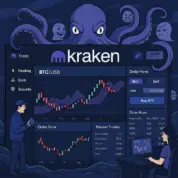
Kraken now provides direct on-chain staking for a basket of Proof-of-Stake (PoS) assets like ETH, SOL, DOT, and ADA. This means your crypto is directly securing the network, and the rewards are generated programmatically, which is the exact model the SEC’s later guidance in 2025 defined as compliant. They are acting as a custodian facilitating a core network function, not offering an unregistered investment contract.
The Game Changer: Bitcoin Staking via Babylon Protocol
The biggest story in Kraken’s 2025 ecosystem is the support for Bitcoin Staking via the Babylon protocol. This is not some wrapped token or lending scheme; this is a Layer-2 solution that allows BTC holders to commit their native Bitcoin to help secure Proof-of-Stake networks without giving up custody or moving their funds off the Bitcoin blockchain.
| Asset | Staking Type | Estimated APR | Unbonding Period | Reward Asset |
|---|---|---|---|---|
| ETH | On-chain (Bonded) | 4.5–6.5% | 7 days | ETH |
| SOL | On-chain (Bonded) | 6.0–8.0% | 3 days | SOL |
| DOT | On-chain (Bonded) | 8.0–12.0% | 28 days | DOT |
| BTC (Babylon) | Layer-2 Protocol | Up to 1.0% (Bonded) | 7 days | $BABY Token |
Kraken’s flexible staking is perfect if you need liquidity. However, the higher yields come from bonded staking, where your assets are locked for a specific period, rewarding you for providing long-term security to the network. Kraken provides historical APR data and alerts, making it easy to plan your yield strategy.
State-Level Staking Restrictions (The Fine Print)
While the service is back, US federal law dictates state-by-state compliance. Critical Note: Kraken does not offer services to residents of New York (NY) and Maine (ME). For other states, while the staking product is available, restrictions may apply. Always check Kraken’s eligibility page; the annoyance of these rules is offset by the security of knowing Kraken adheres strictly to them.
Security & Custody: The Full-Reserve SPDI Charter Advantage
Kraken’s security setup isn’t just “solid”—it’s institutional-grade. The platform has spent years building a reputation defined by paranoia and prudence. Around 95% of assets sit in offline cold storage—not a marketing claim, but a verifiable part of their operational architecture. Users benefit from 2FA, withdrawal whitelists, and strict fund segregation.
The Game Changer: Wyoming SPDI Bank Charter
Here is the deepest differentiator: Kraken Financial holds a Special Purpose Depository Institution (SPDI) bank charter in Wyoming. This is not a “trust” or a “fintech license”—it’s a state-chartered bank license. While it is not FDIC-insured (because it deals with crypto), the SPDI charter imposes two huge advantages:
- Full-Reserve Banking: Unlike traditional banks, SPDIs must hold 100% of their fiat deposits in liquid, unencumbered reserves. They cannot lend out your cash. This eliminates fractional-reserve risk, making it inherently safer for custody.
- Qualified Custodian Status: Being a state-chartered bank makes Kraken a Qualified Custodian under SEC rules. This is crucial for institutional and high-net-worth investors who demand the highest level of regulatory oversight for their assets.
If you treat your crypto like long-term capital, this matters. Real oversight. Real rules. Real accountability. Kraken’s legal framework is designed for survival, not hype.
The Need for Self-Custody (A Warning)
Still, let’s be real: no platform is bulletproof. Even with all the regulation, smart custody is still on you. You should still use hardware wallets for big bags. Kraken’s role is to handle high-frequency trading and earning, but the final responsibility lies with the user. Kraken provides the safety net; you provide the vigilance.
Regulation: Kraken’s Survival Playbook in the SEC Era
Kraken didn’t dodge U.S. regulators—it walked straight into the fire, making necessary concessions and changes to stay compliant. It’s registered with FinCEN, worked with the CFTC, and rebuilt its staking model to fit the SEC’s later 2025 guidelines. That’s why it’s still here while others bailed, got slapped with lawsuits, or were forced offshore.
This history of surviving regulatory curveballs gives Kraken a kind of legitimacy most platforms simply don’t have. It’s one of the few places where Americans can stake, earn, and store crypto without sweating every headline, because Kraken has likely already addressed the compliance issue head-on.

Interface: Ugly, But It Works (A Focus on Function over Form)
Let’s address the elephant in the room: Kraken’s User Interface (UI). Yes, it can feel like a throwback to 2018. It lacks the glossy, “Apple Store” appeal of Coinbase, and the primary trading interface (Kraken Pro) looks like it was designed by engineers, not graphic artists.
The Kraken Pro Divide
- The Simple Interface: The main Kraken dashboard is clean enough for beginners, offering simple buy/sell buttons and portfolio tracking.
- The Kraken Pro Interface: This is the tool for serious traders. It’s a deep, powerful, high-function trading terminal with advanced charting and order types. It’s confusing for a newbie, but fantastic for an intermediate or pro who prioritizes low latency and deep order book visibility over aesthetics.
Kraken’s lack of flash is actually a feature, not a bug. They focus development resources on security, compliance, and core trading mechanics—not on endless UI updates. For the trader focused on the numbers, this boring stability is exactly what they are paying for.
How Kraken Stands Against US Competitors (The Ultimate Comparison)
To understand Kraken’s value, you must compare it against the other US giants. Kraken consistently wins on fees (for high-volume users), staking availability, and custody transparency.
| Exchange | Regulatory Status | Staking Available (US) | Core Advantage | Fees (Advanced Trading) |
|---|---|---|---|---|
| Kraken | Full US Regulation (FinCEN, SPDI Bank) | Yes (Broad Asset List) | Security, SPDI Charter, BTC Staking | 0.16% / 0.26% (Very Low) |
| Coinbase | Publicly Traded (NASDAQ), SEC Compliant | Limited (Mostly ETH, state-dependent) | Brand Trust, UX, Fiat On-Ramps | 0.40% / 0.60% (Moderate/High) |
| CEX.IO | Regulated (MSB) | Yes (Limited List) | Exclusive PayPal Deposits, Simplicity | Higher than Kraken (Moderate) |
Kraken’s maker/taker fees (starting as low as 0.16% / 0.26% on Kraken Pro for low volume) undercut Coinbase’s Advanced Trading fees significantly. For the active spot trader, Kraken provides the institutional-grade tools and low costs needed to succeed without the legal headache of offshore platforms.
Should You Use Kraken in 2025? (Final Verdict)
Kraken isn’t here to impress you with flashy banners or influencer hype. It’s not trying to be cool. It’s trying to survive—and help you survive the regulatory winter. In a market full of noise, rug pulls, and regulatory curveballs, that’s worth its weight in gold.
Kraken is Your Ideal Platform If:
- You are a long-term holder who prioritizes secure custody and legal staking yield.
- You are an intermediate or professional trader focused on low fees (via Kraken Pro) and deep liquidity.
- You need a US-regulated platform with the SPDI bank charter advantage.
- You want to participate in BTC Staking via Babylon.
Coinbase has the brand. Bybit has the flash. But Kraken? Kraken’s the quiet one in the corner, stacking compliance docs and cold wallets. That’s not sexy—but in 2025, safe is the ultimate flex.
Final Call to Action
If you’re ready to trade on a platform where security and compliance are paramount, it’s time to stop worrying about the headlines and start earning yield legally. Sign Up for Kraken and Secure Your Crypto Today.
CEX.IO FAQs: Your Crypto Questions Answered
Here are the most common questions US traders ask about CEX.IO, giving you all the quick insights you need before signing up.
- Q: Is Kraken available in all US states?
A: No. Kraken does not offer services to residents of New York (NY) and Maine (ME). You must check their official supported list for your specific state. - Q: How do Kraken’s trading fees compare to Coinbase?
A: Kraken Pro’s fees (starting at 0.16% / 0.26%) are significantly lower than Coinbase Advanced Trading fees, making it generally cheaper for active trading. - Q: Can I use PayPal on Kraken?
A: No, Kraken does not support PayPal for funding. For quick deposits, CEX.IO is the better choice, but Kraken offers highly competitive ACH and Wire options. - Q: Can I stake crypto legally in the US?
A: Yes. Kraken’s on-chain staking is available in many US states and is structured to comply with current regulatory guidelines. Always check your state’s eligibility. - Q: What is the SPDI charter?
A: The Special Purpose Depository Institution charter allows Kraken Financial to operate as a state-chartered bank in Wyoming, requiring 100% reserves and making it a Qualified Custodian. - Q: Are deposits fast?
A: Yes, ACH transfers are fast (usually 1-2 business days), and Wire transfers are quick. - Q: Is Kraken legit?
A: Absolutely. With a 10-year history, FinCEN registration, and a banking charter, Kraken is one of the most compliant and trusted exchanges globally.
Disclaimer ⚠️
We are not financial advisors and assume no responsibility for any decisions you make.
Cryptocurrencies are highly volatile and risky. You may lose all invested capital.
Always do your own research (DYOR) and consult qualified professionals before making any financial or legal decisions.We make no guarantees regarding the accuracy, completeness, or reliability of the information provided.
References to third-party services or projects do not imply endorsement.
By using this site, you agree that all actions are at your own risk and you release the site owners and authors from any liability.
(Note: Some links in this article are affiliate links. We may receive a commission if you sign up through them, at no extra cost to you.)