
Eliza Framework Guide 2026: Deploying Autonomous AI Agents
Building Autonomous On-Chain Entities: Eliza Framework Guide 2026
Eliza isn’t just another bot—it’s a sovereign AI infrastructure built for the chaos of on-chain markets. By 2025, it became the de facto framework for autonomous agents, dominating both Solana and EVM ecosystems.
Traders, developers, and liquidity providers rely on ElizaOS 2026 to deploy persona-driven agents that think, act, and adapt without centralized supervision. Unlike legacy scripts, these agents maintain persistent memory, modular flexibility, and real-time responsiveness.
The rise of Eliza coincides with a shift from passive signal-following to intent-driven execution, where every action reflects the agent’s personality and strategy, not just raw price triggers.
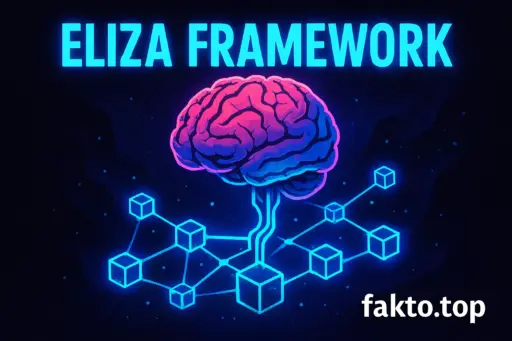
The Modular Architecture: Clients, Providers, and Actions
The first layer in the Eliza stack is Clients. These are the agent’s eyes and ears, living on social channels like Twitter, Discord, and Telegram. Clients handle message ingestion, command parsing, and signal detection. For example, a Degen Trader agent can scan Discord pump channels, extract token mentions, and queue actionable insights.
This module abstracts platform-specific APIs, so devs can swap one social feed for another without rewriting core logic. The client layer ensures the agent stays plugged into the right community signals while maintaining persona consistency.
The second pillar is Providers. Providers fetch live market data, on-chain analytics, and price feeds from oracles. They’re the heartbeat of any autonomous agent. Whether pulling Uniswap pools, Solana liquidity events, or NFT floor prices, providers normalize incoming data into a structure the agent can process.
Developers can chain multiple providers to cross-check signals, reducing exposure to corrupted or lagged feeds. In practice, Providers allow agents to detect arbitrage windows, liquidity imbalances, or governance opportunities in real-time, forming the backbone for dynamic decision-making.
Why Modularity Beats Monolithic Bots
Modularity is where Eliza leaves frameworks like ai crypto arbitrage 2026 in the dust. Traditional bots are linear: a signal hits, an action triggers, and the flow ends. Eliza’s architecture decouples sensing, reasoning, and executing, allowing each module to evolve independently. Upgrade a provider, add a new client, or tweak an action algorithm without touching other layers. Agents adapt faster, scale horizontally, and coordinate seamlessly with peers. For devs and degens alike, this translates to higher alpha, fewer rug-check surprises, and persistent operational resilience across volatile markets.
Pro-Tip: When building a Degen persona, configure Clients to prioritize fast-moving Discord channels, but throttle Telegram feeds to avoid spamming your execution pipeline.
Defining Personality: The Magic of Character Files
At the core of every Eliza agent is the AI agent character file. This JSON blueprint isn’t just metadata—it’s the agent’s DNA. It defines persona traits, risk appetite, trading style, and even behavioral quirks. Developers can specify everything from response tone to prioritization of certain liquidity pools or token types. The character file also dictates which data channels the agent favors and how aggressively it interprets signals. By externalizing personality into a modular file, Eliza separates decision logic from execution, enabling multiple agents to run simultaneously with distinct identities, each aligned to the trader’s strategy or social-financial objectives.
The JSON structure is straightforward yet flexible. Core fields include riskProfile, preferredMarkets, signalSensitivity, and actionWeights. Additional parameters control narrative style and lore integration, allowing agents to “roleplay” within communities. For instance, a Degen Trader persona might assign high weight to volatile tokens trending on Discord, whereas a Risk Manager persona monitors large LP movements and adjusts staking strategies accordingly. This structured approach ensures each agent behaves predictably yet can adapt to real-time data, all while maintaining a recognizable character in social contexts.

Why Lore and Style Matter for Social-Financial Engineering
Lore and style aren’t aesthetic—they’re functional. Agents interact on-chain and off-chain; their responses influence community perception, token sentiment, and even governance outcomes. A persona with “aggressive” style will push trades and mint NFTs quickly, signaling confidence to other market participants. Meanwhile, a “cautious” persona might analyze multiple data points before acting, subtly shaping social and financial narratives. These design choices affect how scouts, execution agents, and governance participants interpret activity, amplifying strategy beyond raw alpha. In essence, style and lore act as a soft layer of influence over decentralized markets.
Social-financial engineering through character files allows for micro-strategy specialization. Multiple agents can run in parallel, each with a tailored persona targeting different signals or community segments. One agent could monitor memecoins on Discord, another track NFT auctions, and a third perform cross-chain governance analysis. By embedding style, lore, and action priorities into the JSON, devs create an ecosystem of autonomous actors whose interactions amplify both market reach and intelligence gathering. This multi-persona design is why Eliza framework ai16z is preferred for sophisticated, intent-driven operations.
Pro-Tip: When deploying agents in communities with high memecoin activity, combine aggressive Degen personas with conservative Risk Manager personas. This ensures coverage without overexposure to volatility.
- JSON flexibility: Easily tweak persona traits without rewriting core agent logic.
- Multi-agent synergy: Agents with different styles can complement each other, covering more market angles.
- Social signaling: Persona-driven behavior affects both on-chain decisions and community perception.
By leveraging character files, devs unlock a new layer of strategy: agents aren’t just executing trades—they’re performing social-financial maneuvers. This turns Eliza into a living, modular system where personality, memory, and action intersect. It’s no wonder multi-agent systems crypto projects increasingly rely on ElizaOS 2026 to deploy autonomous, context-aware actors that influence both price and perception simultaneously.
Technical Guide — Deploying Eliza with PostgreSQL, Claude 3.5, and Docker
Moving from a local “demo” setup to a production-grade autonomous agent requires a shift in infrastructure. If your agent is meant to survive 24/7 on-chain rotations without losing its memory or crashing during high-volatility events, you need a robust, containerized environment that separates the database from the application logic.
Configuring PostgreSQL with pgvector for Long-Term Memory
By default, Eliza often uses SQLite (pglite), which is fine for testing but fails under the weight of thousands of social signals and trade histories. To build a truly “streetwise” agent, we use PostgreSQL with the pgvector extension. This setup allows the agent to perform semantic searches across its entire history in milliseconds.
- Deploy the Database: Run the official image:
docker run --name eliza-db -e POSTGRES_PASSWORD=your_secure_pass -p 5432:5432 -d pgvector/pgvector:pg16 - Initialize Vector Support: Connect to your DB and run
CREATE EXTENSION IF NOT EXISTS vector;to enable embedding storage. - Update Configuration: In your
.envfile, setPOSTGRES_URL=postgresql://postgres:your_secure_pass@localhost:5432/eliza.
Integrating Claude 3.5 Sonnet as the Reasoning Engine
While GPT-4o is a strong generalist, Claude 3.5 Sonnet has proven superior for analyzing complex Solana program logs and recursive contract traces. Its reasoning “vibe” is also more aligned with crypto-native communication, making it less prone to sounding like a generic corporate AI. In ElizaOS 2026, this is the gold standard for high-stakes execution.
To set this up, you must provide your ANTHROPIC_API_KEY and set the model to claude-3-5-sonnet-latest. However, there is a technical catch: since Anthropic does not provide an embedding model, you must still provide an OPENAI_API_KEY for the text-embedding-3-small model. Eliza will use OpenAI to “calculate” the memory vectors and PostgreSQL to “store” them, creating a high-performance hybrid brain.
Containerization and Deployment on Vultr/AWS
To avoid the “it works on my machine” syndrome, professional deployments rely on Docker Compose. For a stable agent, allocate at least 4GB of RAM—anything less will likely cause the pnpm build process to fail. Using a Vultr High-Frequency VPS or an AWS t3.medium instance ensures the agent can handle rapid-fire WebSocket signals from multiple chains simultaneously.
Once your docker-compose.yml is configured, use Vultr’s “Docker One-Click” app to skip manual OS hardening. After launching, keep a close eye on the logs via docker logs -f eliza-agent. This allows you to monitor real-time decision-making and ensure the agent isn’t hitting rate limits on social APIs or failing to commit its trade data to the PostgreSQL store.
Memory and RAG: How Agents Remember Their Mistakes
Persistent memory is what separates a rookie agent from a seasoned Eliza operator. Unlike session-only memory that forgets context once the process ends, persistent memory lets agents retain knowledge about prior trades, signals, and social interactions across cycles. Eliza leverages Retrieval-Augmented Generation (RAG) to embed historical data into vector stores, allowing agents to recall prior successes, failed arbitrage attempts, or governance votes. Without this memory, even a perfectly coded persona risks repeating errors, chasing ghost signals, or executing trades based on outdated price spikes.
RAG works by creating dense embeddings of previous interactions and linking them to real-time queries. When a scout agent identifies a potential arbitrage window, it doesn’t act blindly; it cross-references past signals and actions stored in memory. This layer of intelligence ensures that agents evolve over time, learning which liquidity providers are trustworthy, which tokens consistently rug, and which communities generate actionable hype. Persistent memory essentially acts as the agent’s streetwise mentor, keeping degens from walking into obvious traps.
Comparatively, passive yield in AI crypto staking 2026 is predictable but rigid. A staker earns APR based on static conditions, but active agents need memory to make decisions on volatile, dynamic markets. While staking locks capital for a known yield, Eliza agents with RAG can pursue multiple strategies simultaneously, adjusting for slippage, gas spikes, or sudden liquidity withdrawals. Memory here is risk management in action: it turns reactive bots into proactive operators capable of surviving extreme volatility.
Practical examples show the power of memory. Consider an agent repeatedly chasing flash loan arbitrage on a low-liquidity pool. Without memory, it could trigger repeated failed transactions, burning gas fees. With RAG, the agent records failed attempts and identifies patterns—time-of-day liquidity dips, repeated frontrunning addresses, or oracle delays—allowing it to either adjust its execution parameters or skip certain pools entirely. This prevents costly mistakes while preserving alpha opportunities for other profitable targets.
Pro-Tip: Integrate social signals into your memory embeddings. Agents that remember previous influencer-driven pumps can pre-emptively flag high-risk tokens and avoid repeated losses.
- Persistent memory: Retains prior interactions to prevent repeating costly errors.
- Vector embeddings: Enable fast semantic retrieval of relevant historical data.
- Dynamic decision-making: Agents adjust strategies in real-time using memory context.
RAG also enhances multi-agent coordination. Scouts, auditors, and executors can share memory embeddings, allowing the swarm to operate with collective experience. When one agent identifies a fraudulent contract, others can immediately factor that knowledge into their execution logic. This communal memory dramatically reduces rug risk and improves swarm efficiency. In essence, memory in Eliza isn’t just about recall; it’s about turning every action into a learning opportunity and transforming ephemeral signals into long-term strategic intelligence.
The Rise of Agentic Swarms: Multi-Agent Coordination
Eliza’s true power emerges when multiple agents operate as a coordinated swarm. Agent-to-Agent (A2A) communication allows scouts, auditors, and executors to share real-time insights. A scout agent can monitor Pump.fun or Discord chatter for token spikes, while a validation agent checks smart contract integrity. Meanwhile, an executor waits for confirmation signals, ready to act the instant conditions align. This division of labor mirrors a high-performance trading desk, but fully autonomous and decentralized. Each agent retains its persona, memory, and risk preferences, ensuring diverse strategies converge without conflict or redundancy.
Economically, swarms create emergent advantages. Scout agents reduce information asymmetry, while execution agents optimize capital deployment and gas efficiency. This separation of roles allows the swarm to operate continuously, maximizing alpha capture while minimizing exposure to rug-pulls or failed transactions. Multi-agent coordination also enables overlapping coverage across multiple chains and DeFi protocols, effectively scaling a single operator’s reach. The swarm isn’t just a collection of bots; it’s a self-organizing, persona-driven intelligence network that thrives on on-chain signals and social sentiment.
Pro-Tip: Assign slightly different risk thresholds to each agent in a swarm. This staggered approach prevents simultaneous misfires and allows learning from collective mistakes.
- Scout Agents: Monitor social channels and token activity in real-time.
- Validation Agents: Audit contracts and liquidity pools before execution.
- Execution Agents: Carry out trades or staking decisions based on collective input.
- A2A Coordination: Ensures agents share insights without central bottlenecks.
Eliza vs. LangChain: Choosing the Right Tool for Web3
LangChain has its merits for enterprise pipelines, but Eliza thrives in the low-latency, high-risk environment of crypto. ElizaOS natively supports on-chain logic, social signal parsing, and multi-agent orchestration. Developers like Shaw report switching from LangChain due to lower execution latency, simplified A2A coordination, and robust persona management. While LangChain requires heavy customization for social integration or chain-native actions, Eliza agents come ready to operate in Web3 communities, with persistent memory, modular clients, and real-time adaptability baked in. For degens and KOLs, this shift isn’t optional—it’s a survival strategy.
Conclusion: The Sovereign Future of Autonomous AI
The Eliza framework points toward a future of sovereign AI on Solana, Ethereum, and beyond. Agents are no longer tethered to centralized servers—they own their keys, memory, and execution environment. Plugins like the Terminal of Truths and native Trust Engines enhance security, ensuring agents make decisions without external interference. Multi-agent swarms, persona-driven behavior, and persistent memory converge to create self-governing ecosystems capable of managing funds, executing governance votes, and influencing social sentiment. As 2026 unfolds, expect ElizaOS-powered agents to define a new standard for autonomy, intent, and strategic influence across decentralized finance.
In short, ElizaOS isn’t just a framework—it’s a paradigm shift. The combination of modular architecture, AI agent character files, memory-backed decision-making, and agentic swarms transforms autonomous entities from reactive scripts into intelligent, intent-driven operators. For advanced traders, developers, and degens, mastering Eliza means unlocking a new level of operational sovereignty in the wild, unpredictable world of Web3.
Disclaimer
The information in this guide is intended for educational and informational purposes only.
While examples of autonomous agents, multi-agent systems crypto, and ElizaOS 2026 deployments are discussed, they do not constitute financial advice or guaranteed results.
Readers should exercise caution and perform their own due diligence before deploying agents, executing trades, or interacting with smart contracts.
Autonomous AI in DeFi carries inherent risks, including potential loss of capital, software bugs, or exposure to malicious contracts.
This content reflects expert insights, real-world scenarios, and technical best practices, but outcomes may vary based on market conditions, strategy execution, and individual implementation choices.